
Silver Nitrate Lab
We started our day by taking a look at our test tubes with the copper wire and silver nitrate. OF COURSE I forgot to take a photo, but just trust me when I say that no more things gathered on our copper wire. Mitch said that that was part of the point. When the silver nitrate gets all used up, no more reaction can happen. We tried to remove any leftover material on the copper wire by squirting some DI water onto it. Then, we decanted our silver and placed it into our initial beaker. All of our beakers were collected to be dried.
U7 Chemical Reactions: Rearranging Atoms
We were lead into a review of some key terms that we had previously discussed. What is matter made of? stuff, but more specifically, particles! We had some rules about particles.
What does Conservation of Mass mean? I have to end up with what I started with. It was pointed out that none of us said: Mass cannot be created or destroyed. We said maybe that specific definition was scared out of us. I do like the statement about starting and ending with the same mass. This makes the definition more real for students. We also defined chemical formula, subscripts in formulas, and coefficients. It was here that we stress that the number of molecules are not conserved. However, both atoms and mass were. Why would atoms and mass be conserved?
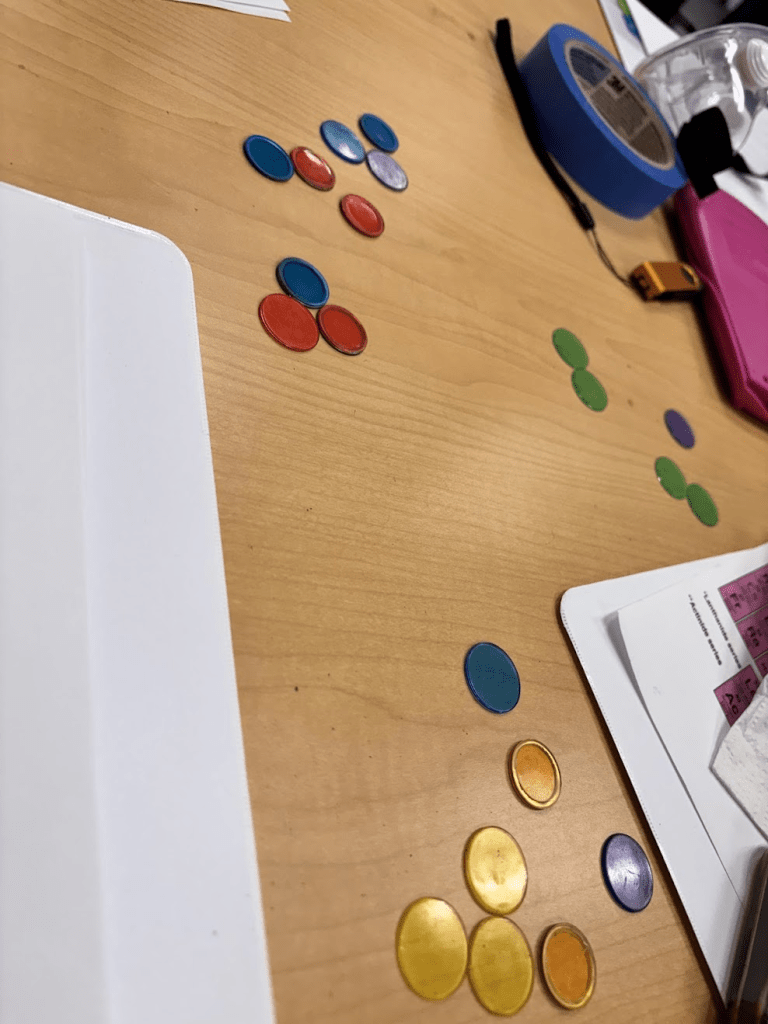
We used these colored discs/bingo chips/math manipulatives to act as our atoms as we balanced equations. I do appreciate that each group had a limited number of chips so that students can see and physically manipulate atoms of reactants being used up to form the products.
Of course, we learned how to balance equations by using the atom inventory or other mathematical means. But it’s fun to be able to see the molecules formed by moving some chips around.
Types of Reactions
I asked when would Types of Reactions be introduced. It would be after completing some balancing equations. Modeling Chem would actually have a lab right about here. Due to time constraints of our workshop, we were unable to do it. I’m writing it here so that I can remember where to insert the lab.
Finishing up the Silver Nitrate Lab
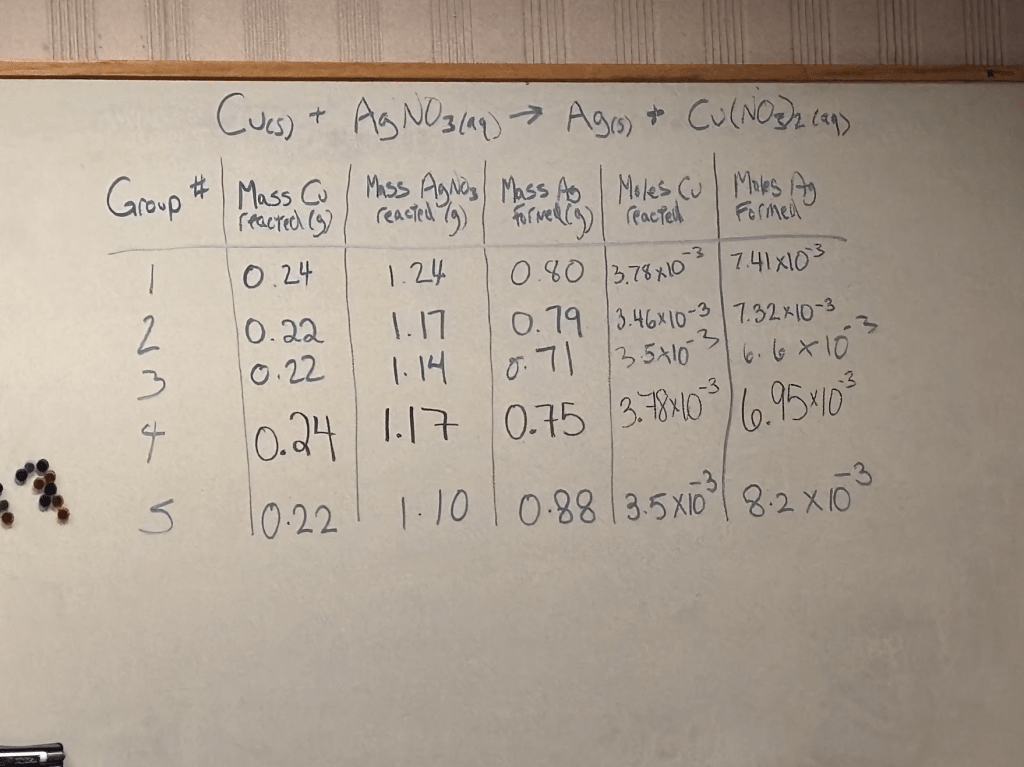
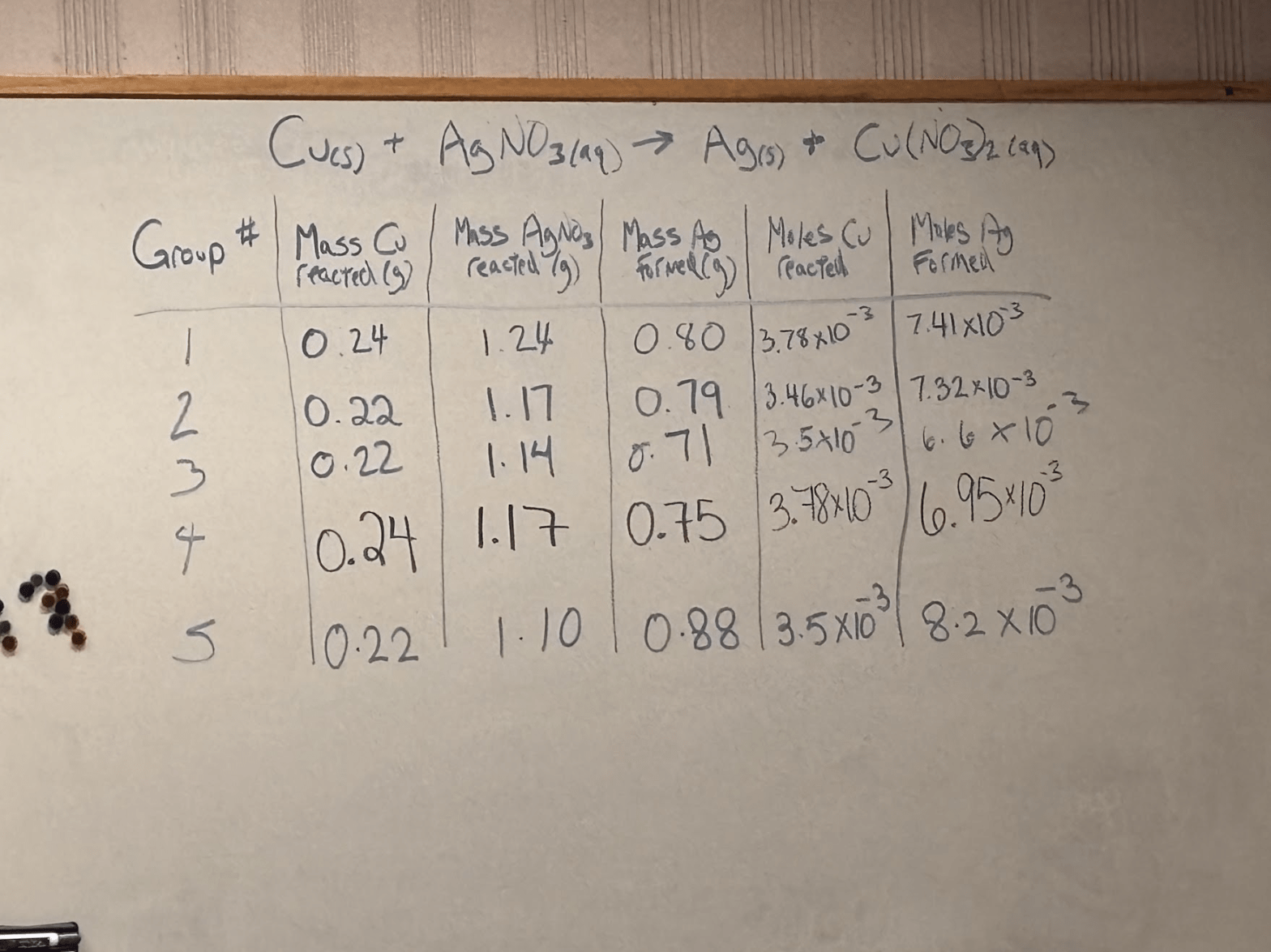
We finished up the silver nitrate lab. I can’t remember now if it was before or after lunch. I spent a lot of time thinking about what time lunch was happening that I wasn’t paying attention to when things were happening. At least I was paying attention to our data and calculating things correctly.
Once again, I forgot to take pictures of our wire and dried silver. Out of curiousity, I wanted to see how much silver per gram was worth today. I think the class collected about $12 of silver. Mitch tells his students that he collects the silver to fund his retirement account. With the amount our summer cohort collected, I’m sure he can retire now…
From here, we saw thqt there was a relationship between the moles of Cu reacted to moles of Ag formed. We saw that the moles of Cu : moles of Ag was about a 1:2 relationship. Our data was roughly about that much. With the number of moles of Cu we started with, 0.00378 moles, we expected to get 0.00756 moles of Ag. Our data shows that it was actually 0.00741 moles collected…pretty good data collection (I think!).
We continued our discussion how the coefficients in the equation would show us the expected ratio of each substance in comparison to another. In this lab, we compared copper and silver. Perfect way to transition to…STOICHIOMETRY!
Mole Relationships and BCA Table
The Modeling Chemistry has the BCA Table introduction come before the BCA Table Reading. Mitch walked us through how to complete the BCA Table. This is very exciting since I taught BCA Table last year. I of course chose the last unit of the year to try the modeling chemistry curriculum materials out. The feedback I received from students is that they largely really liked it.
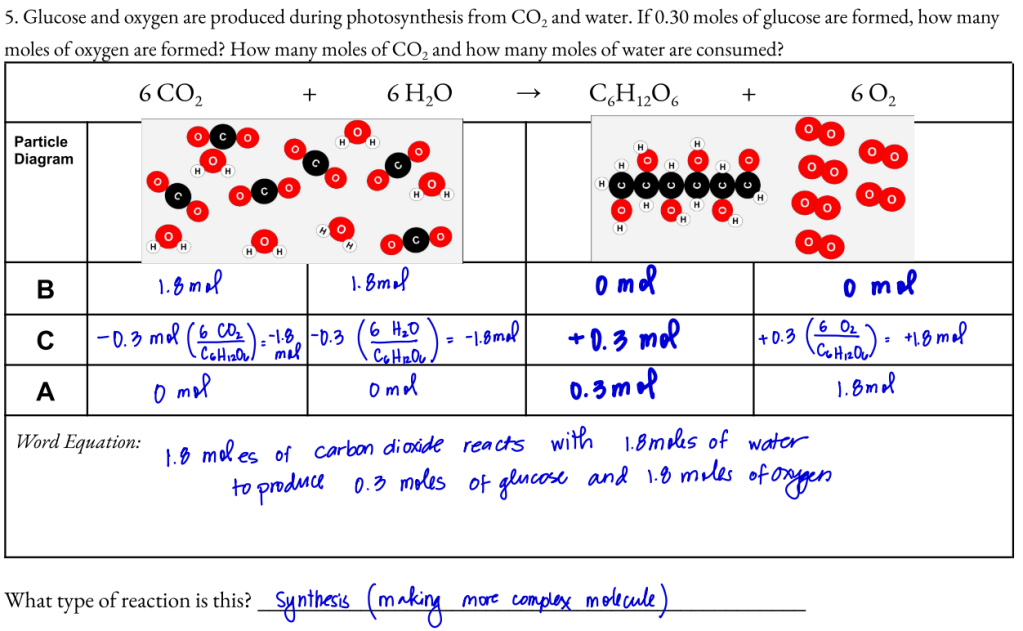
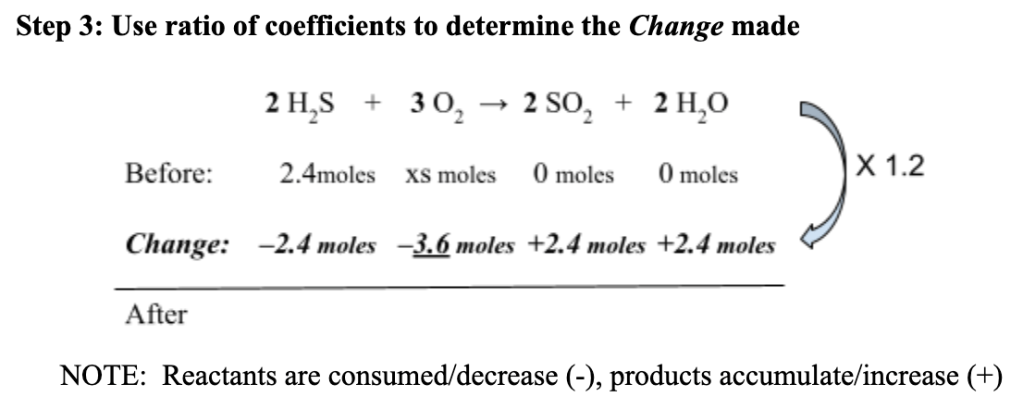
I learned the new way of completing the BCA table, and it got me all turned around by just having one ratio to multiply everything. The way I learned/taught it–yes, that’s pretty much the same thing. But when students got lost, it was easy to see where they got turned around and how to fix it. We did learn that it’s okay to be uncomfortable. I’m not sure if I’m resisting growth here or if it would be better for my students to see where each number was coming from. The way I initially did would easily lend itself to my favorite dimensional analysis train. The way that Modeling 2026 does it emphasizes the proprotional relationship. I’ll have a while to marinate on this.
We spent the rest of class working on U8 WS1 BCA Tables and started U8 WS2 Percent Yield. There were some new formatting changes from the 2018 material I was working from. Essentially, the material was still the same. I did ask the class for a group photo. But I think I’ll post that for the last day reflection. It has been a tiring and rewarding experience. Looking forward to hours 86-90 of our ModChem workshop!
 Learning with Ms. Medrano