
Multiple Representations Reading
An Overview of Recent Research on Multiple Representations – David Rosengrant, Eugenia Etkina and Alan Van Heuvelen is the name of the article we read. We continued the discussion on how learning styles were preferred rather than actually beneficial to learning. Despite the amount of students saying they preferred a certain learning style, the way to meaningful deep learning would be through multiple representations. Modeling Instruction stresses the importance of multiple representations.
U6 WS1: Formula and Particle Diagrams for Compounds
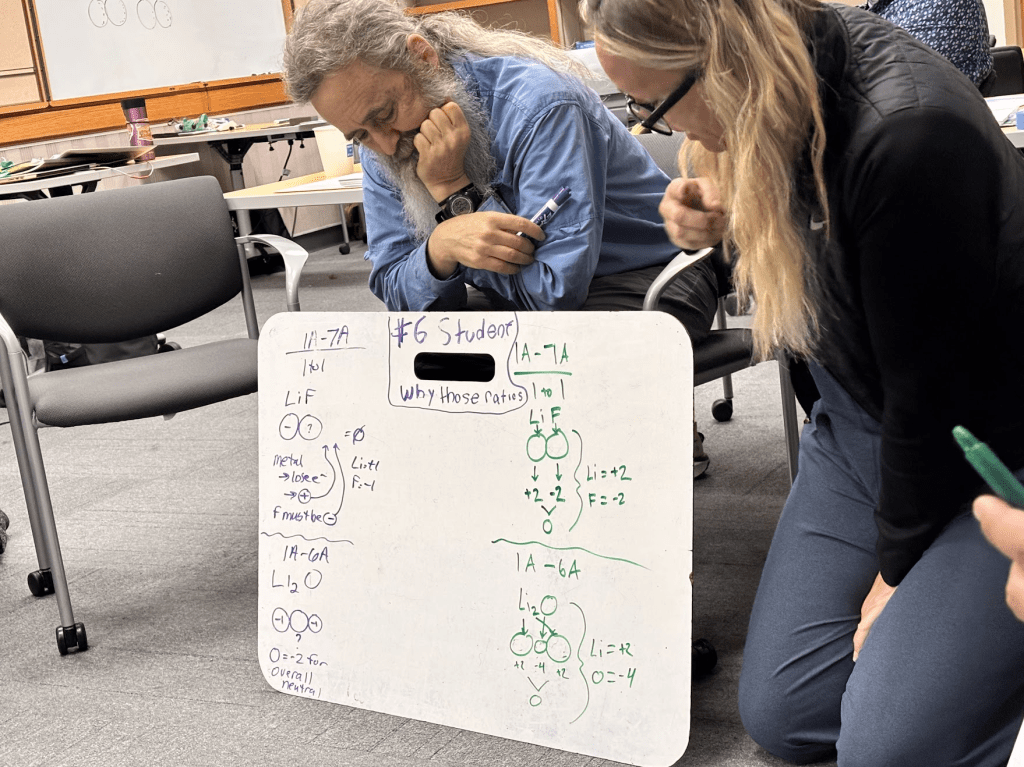
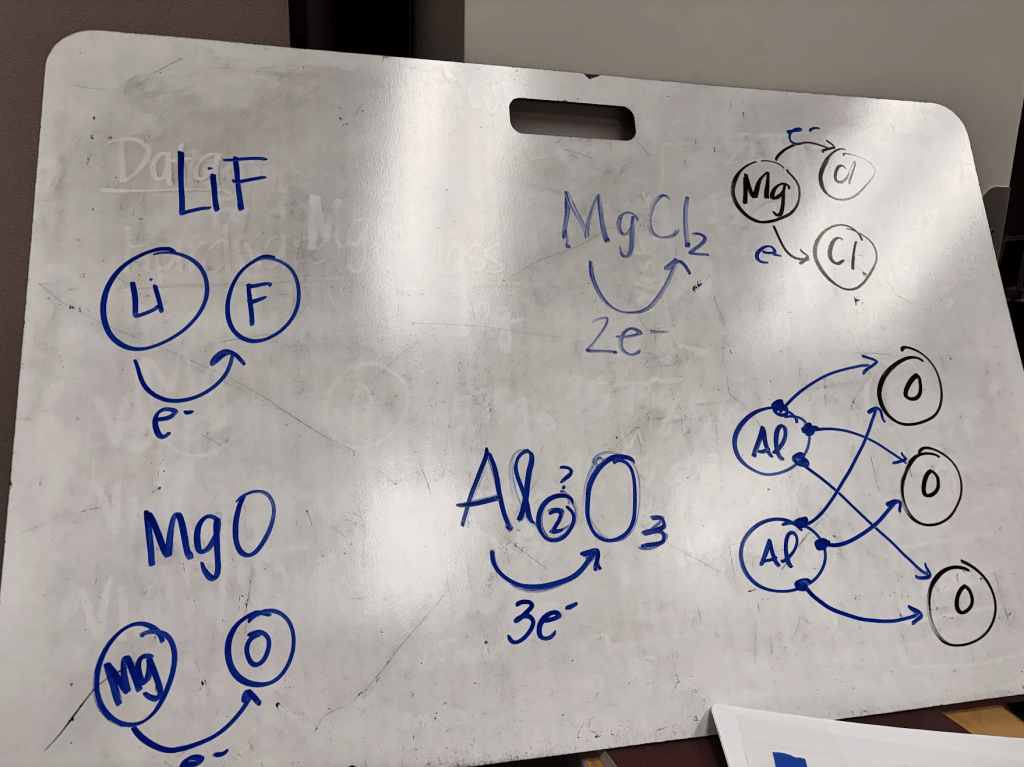
We spent some time exploring our answers. It definitely felt like we are in the last few days of the workshop. Our brains and bodies are tired–the out of towners are ready to go home…and we still have to discuss really difficult things! Trying to make sense of the pattern of the given periodic table was challenging. At the conclusion of our whiteboarding session, it really seemed that the teacher prior knowledge disallowed us from fully engaging into student mode. Mitch and Jae thought that our students wouldn’t be struggling with the concepts we were struggling with. They thought that students might be able to see that MgO, though a 1:1 ratio, would actually have magnesium gives 2 electrons to oxygen.
Structures of Solids Activity
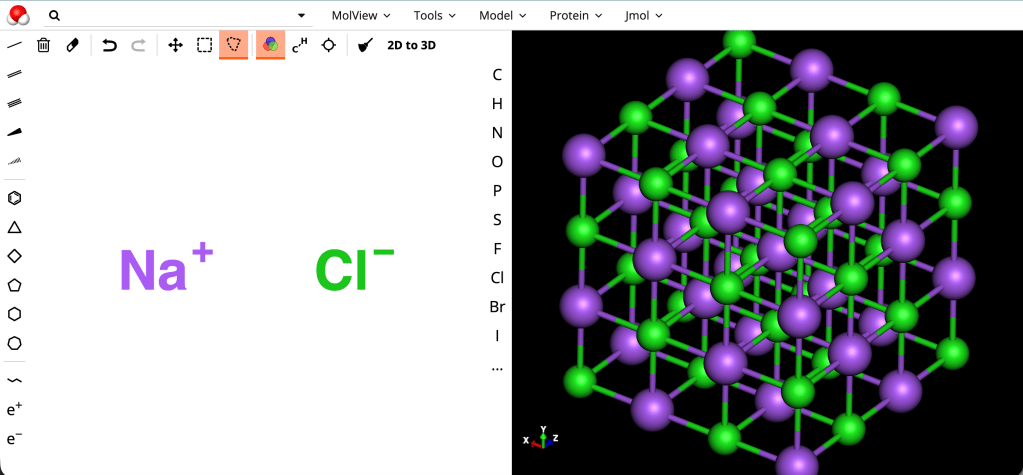
We looked at images synthesized by the Mercury software as well as the more student-friendly MolView, online based software. In MolView, you can see the 2D formula representation as well as a 3D rendering. I was actually surprised with how the ionic compounds looked. Then I was reminded that these aren’t actual photographs of the compounds, rather, they were renderings. ::facepalm:: Yes, the instructors repeatedly reminded us that these were renderings. I appreciated the explanation of how we came to name ionic compounds as a formula unit. It personally gave me a better understanding that ionic compounds form a definite pattern, and the formula that comes from it is just the smallest possible unit.
Unit 8: Silver Nitrate Lab
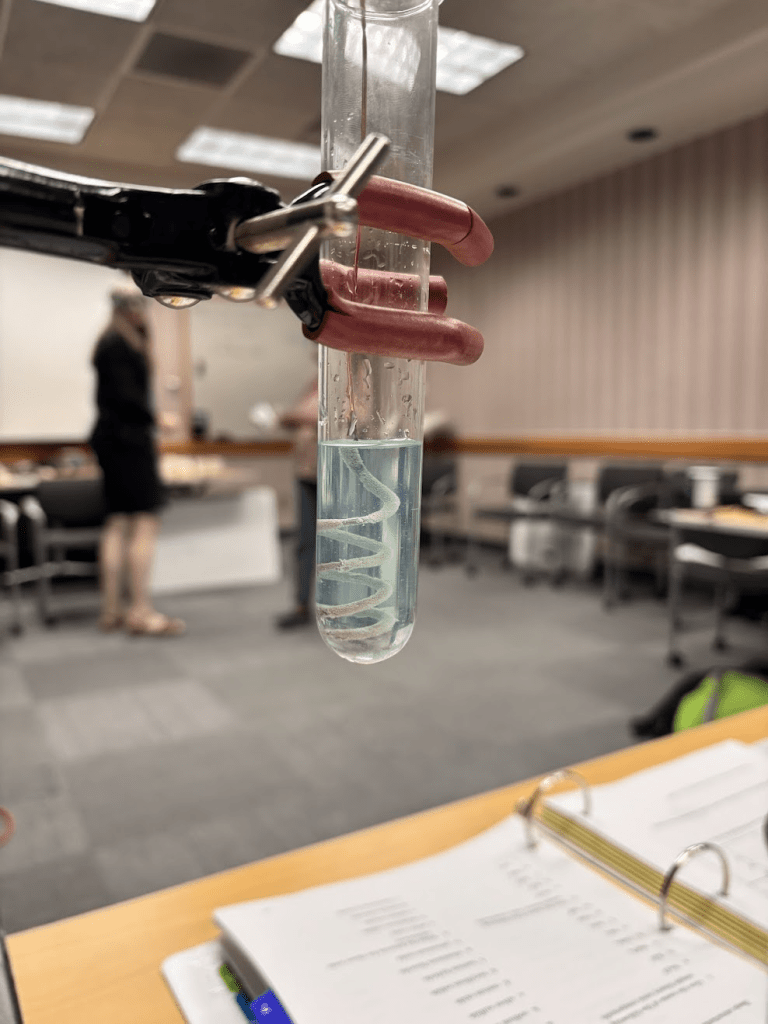
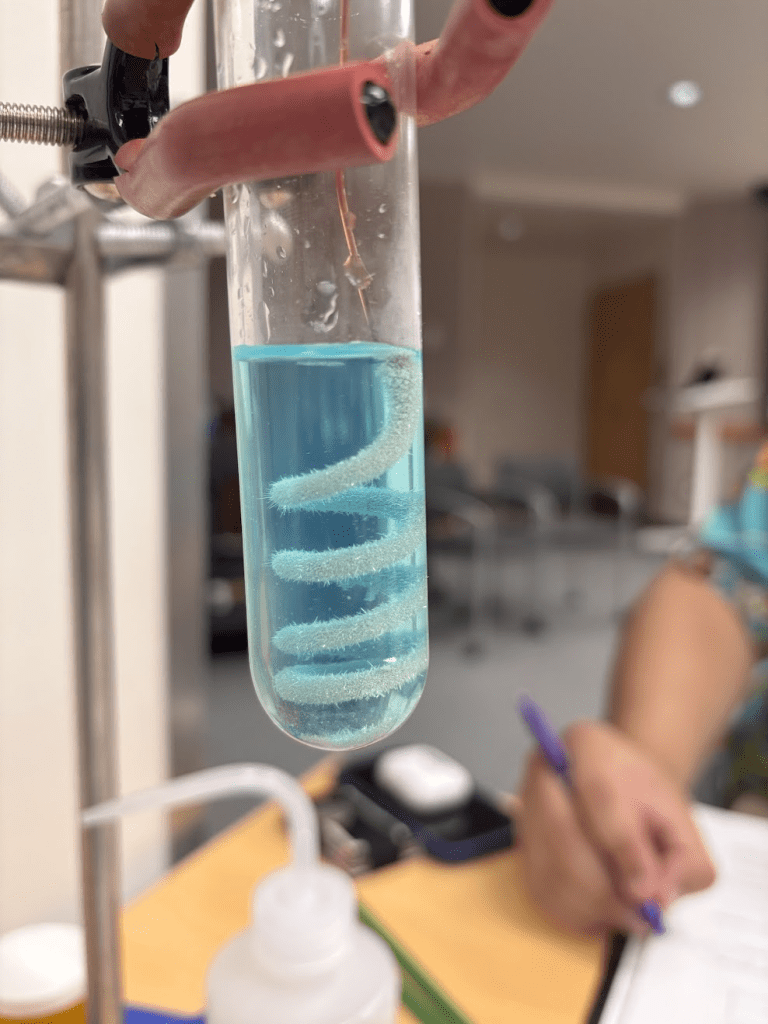
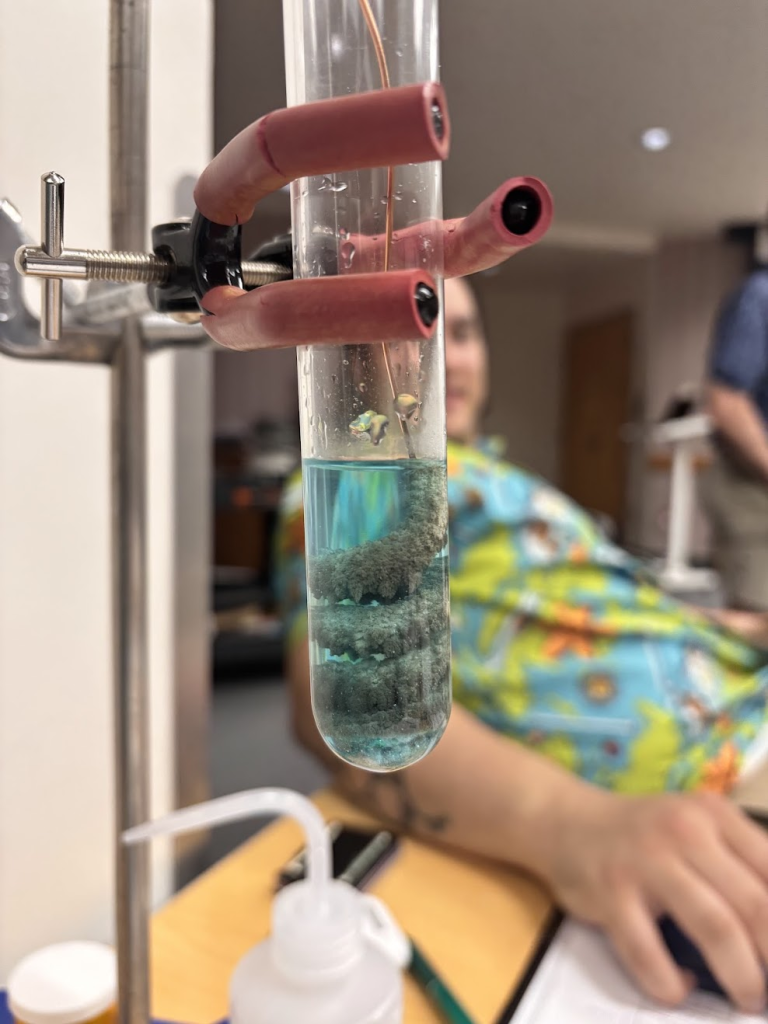
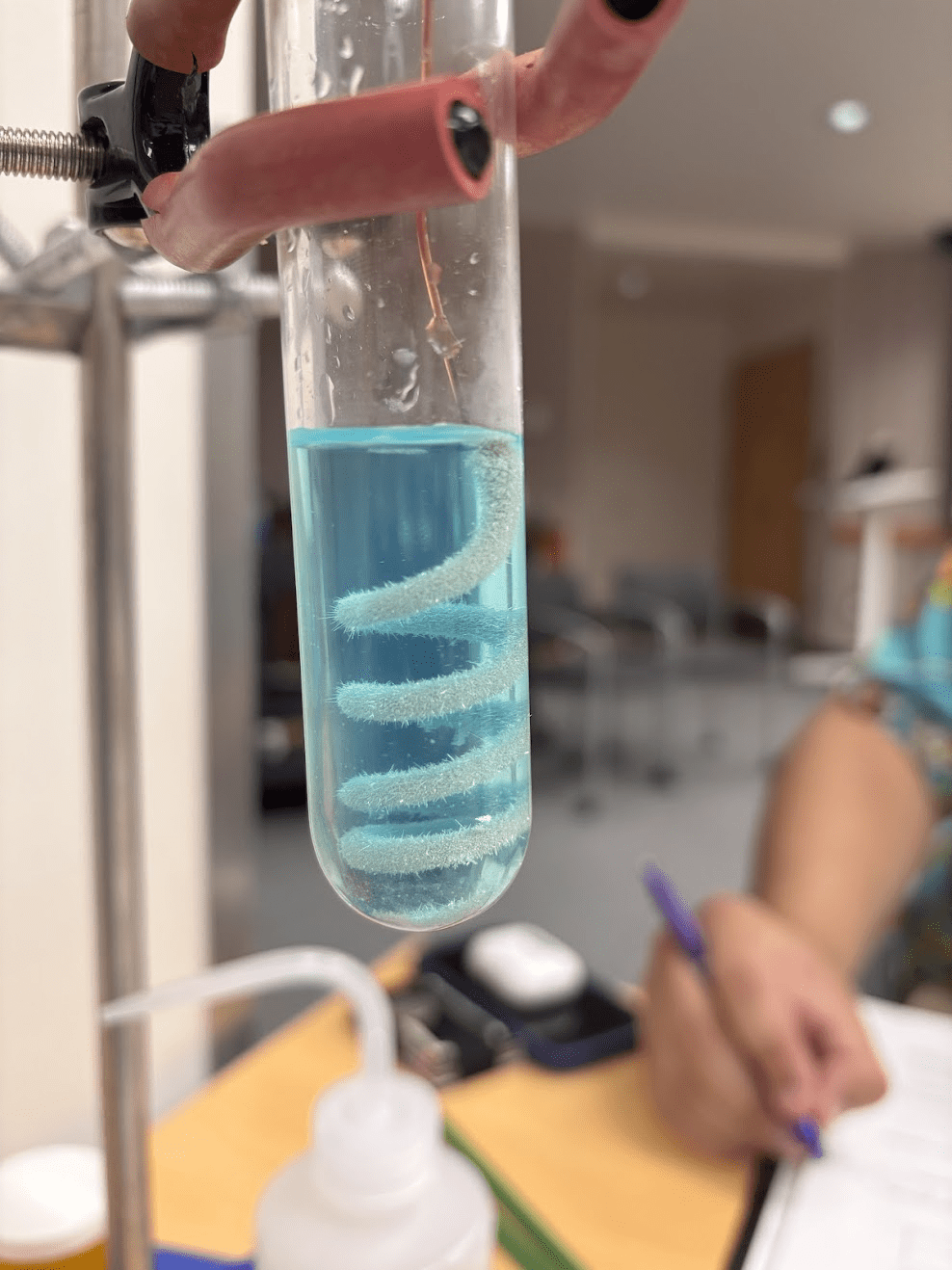
We began the Unit 8 Silver Nitrate lab so that we would have time to let it dry overnight and revisit it tomorrow. The timing of doing this after lunch was brilliant. We all walked to The Chuckbox, apparently an ASU institution, for lunch. But that also meant, we basically had to roll ourselves back to the classroom because we were all so full. We had placed copper wire inside a test tube that had some silver nitrate with distilled water. The progression of it was pretty excitingt o see. There was some fuzzy crystals growing along the wire. Then when we checked on it again, there was a mossy film that kind of looked like algae.
Nail Lab Day 3
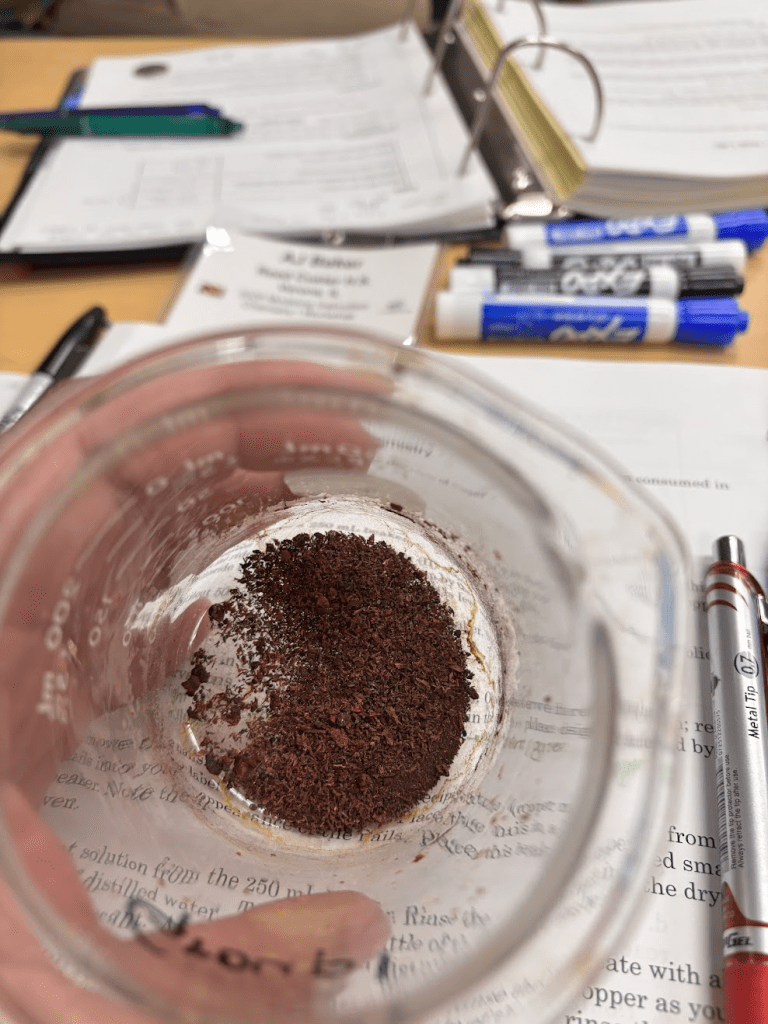
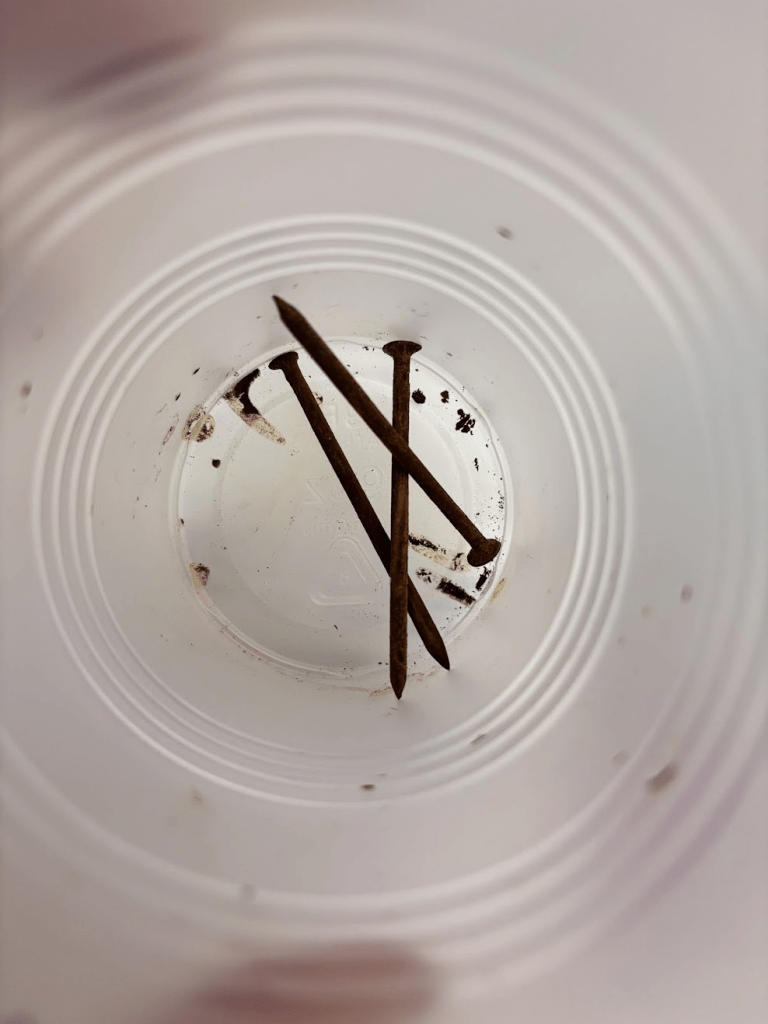
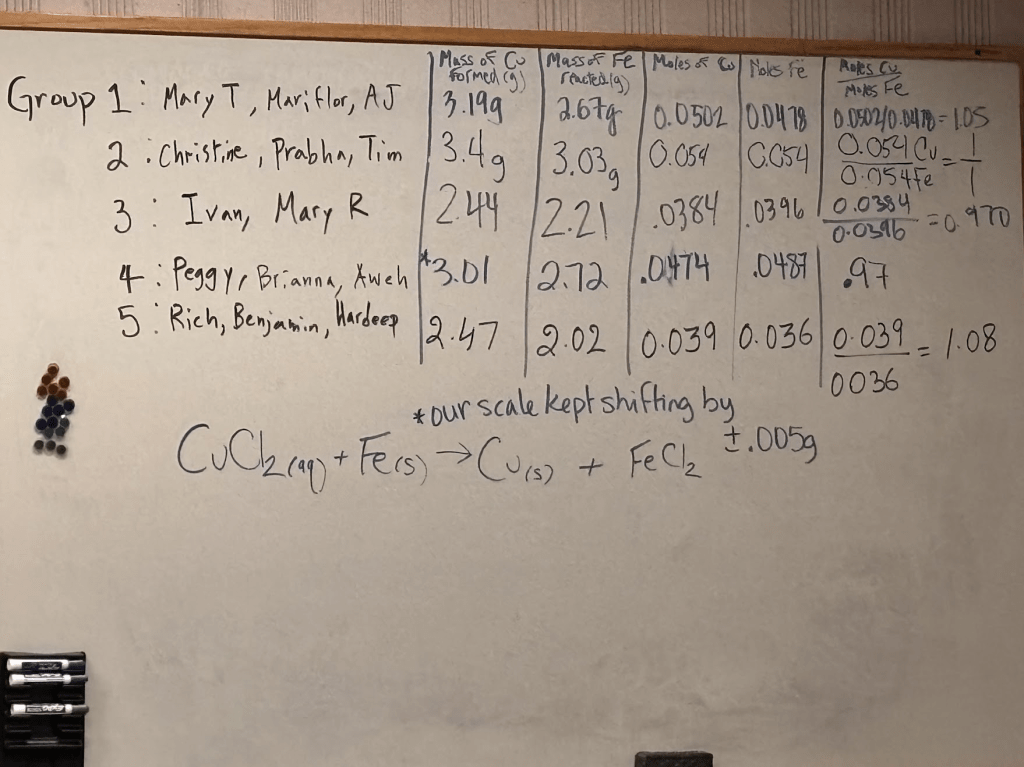
The final day for the Nail Lab (Unit 7). We took a look at the ratio of moles of Cu formed to moles of Fe used. Through our discussion, we discovered that the final product must be FeCl2 because of the ratio of Cu formed from Fe used. Then we went into a long discussion as to why some groups had data that were either above or below 1.00. We were really feeling the afternoon sleepies and asked questions that had Mitch repeating himself. (Sorry, Mitch!) I appreciated the conversation on how to acquire better data because too often, when we ask students to do an error analysis, almost always, they will say- “human error.” At what point did we, as a science teacher community, agree that having students say human error was enough of an explanation?
We appreciated the early dismissal. Some went to the Modeling Mixer at 4 Peaks Brewery. Some, myself included, went home. Just 1.5 more days!

