
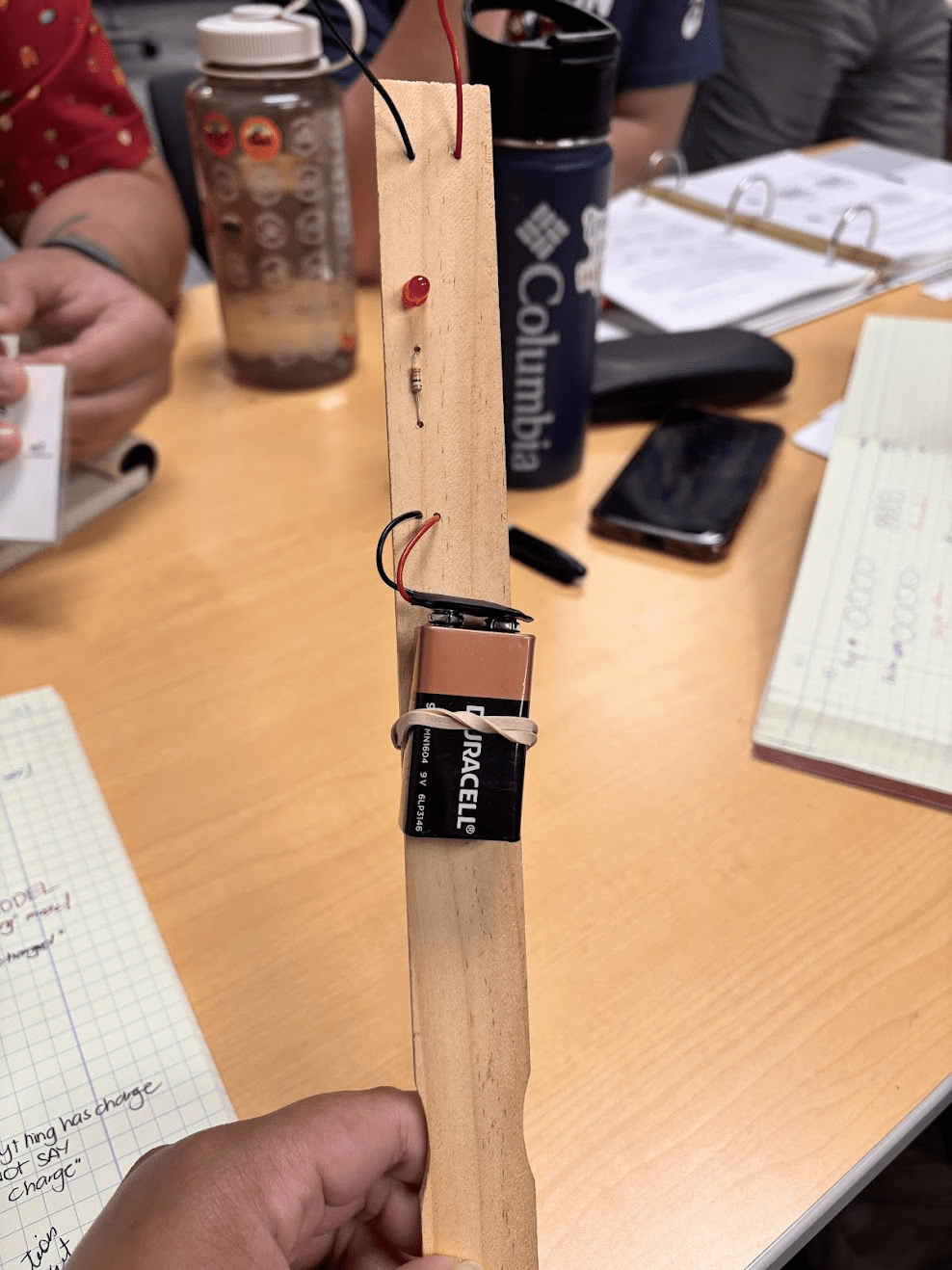
U5 WS: Modeling Stable Compounds
We used an online database to take a look at some properties of a compound.
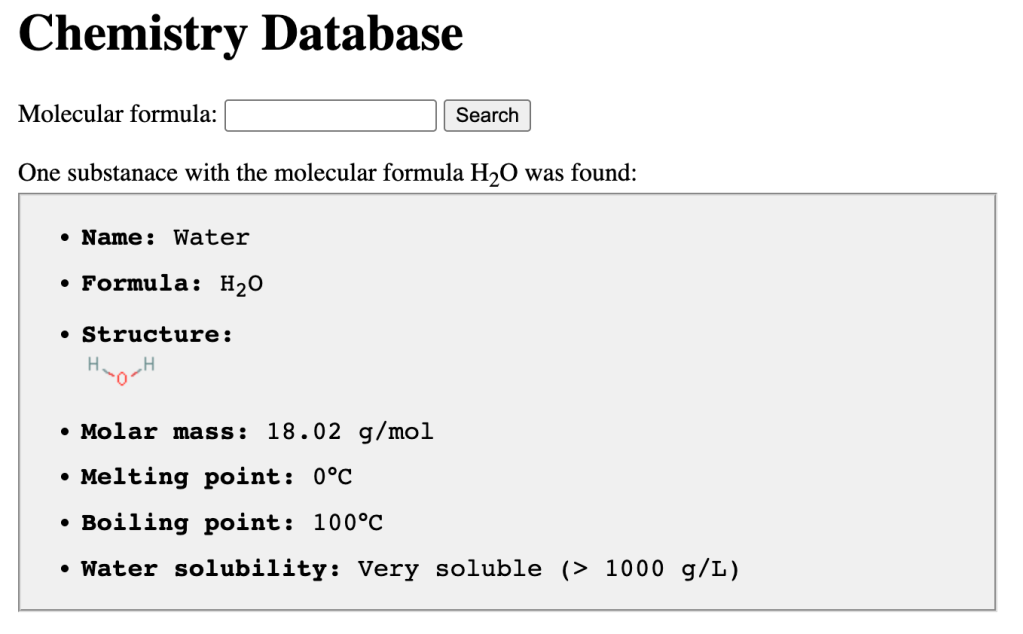
This is what we saw when went to search for water in the database. We were supposed to take note of some of the properties of water. I asked about the structure and if we needed to look at that, but I was not told not at the moment.
The worksheet then goes on to ask us to develop some models of CH4, H2O, and NH3 using some LEGO brick pieces. From here, our group was to create some rules that we may have had in constructing these models. We determined that the little 2×1 pieces might be hydrogen, and the 2×4 brick might be carbon. That would leave 2×2 is oxygen and 2×3 is nitrogen. We were then to draw the side view of our structure.
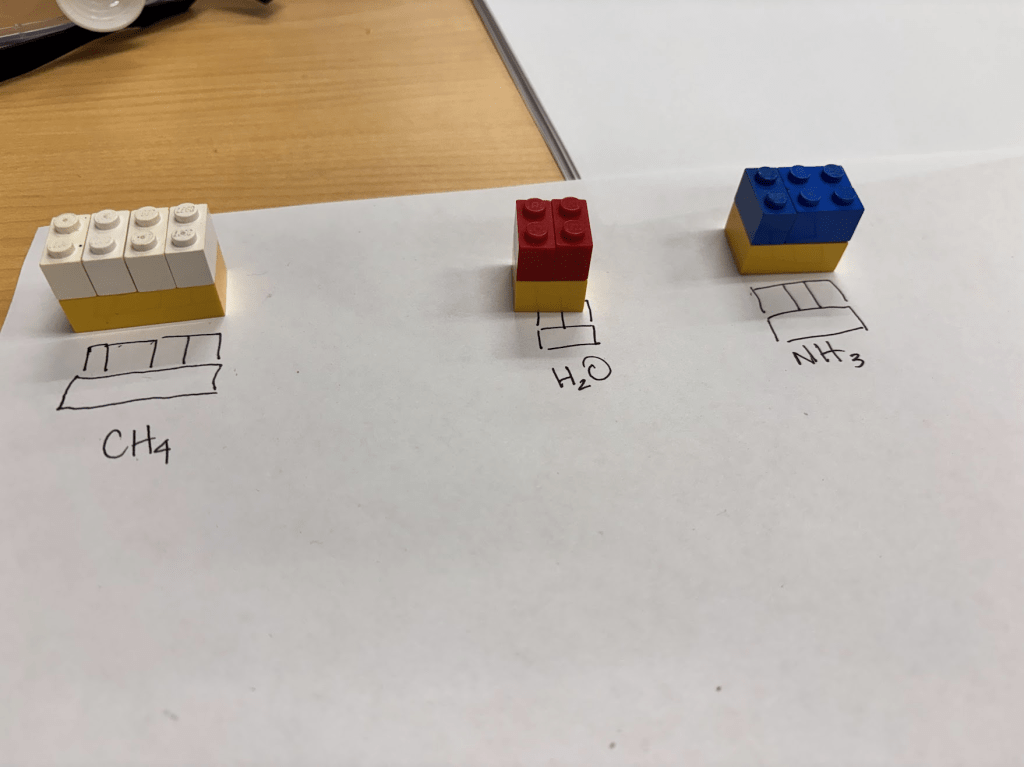
Someone asked why it was chosen to use 2xN pieces. In constructing our models, the configurations got a little wonky. Rather than lining them up to face the same way, some bricks were placed sideways. This presented some problems in thinking that hydrogen would then have 2 connections, and that each element might need to have 2 connections (which would mean a double bond).
It was overall a great discussion, and I concluded that I might look into using 1xN brick pieces. Luckily, there is a LEGO store near my Airbnb, but also one close enough to my home that I wouldn’t mind driving out and picking some pieces out for this lab/activity. We continued to use the LEGO bricks to make some predictions of what C2H2, C2H4, and C2H6 might look like. One of the rules that the group agreed upon that 1 set of double studs would equal ONE connection. I’m still not convinced that this might lead to a bit more misunderstandings, but I haven’t done it yet–so we’ll see!
We were able to see here that Oxygen had the connecting power of 2, Nitrogen had the connecting power of 3, and Carbon had the connecting power of 4. We then determined that “connection power” is something called “valence.” We didn’t really go into more detail than that at this point.
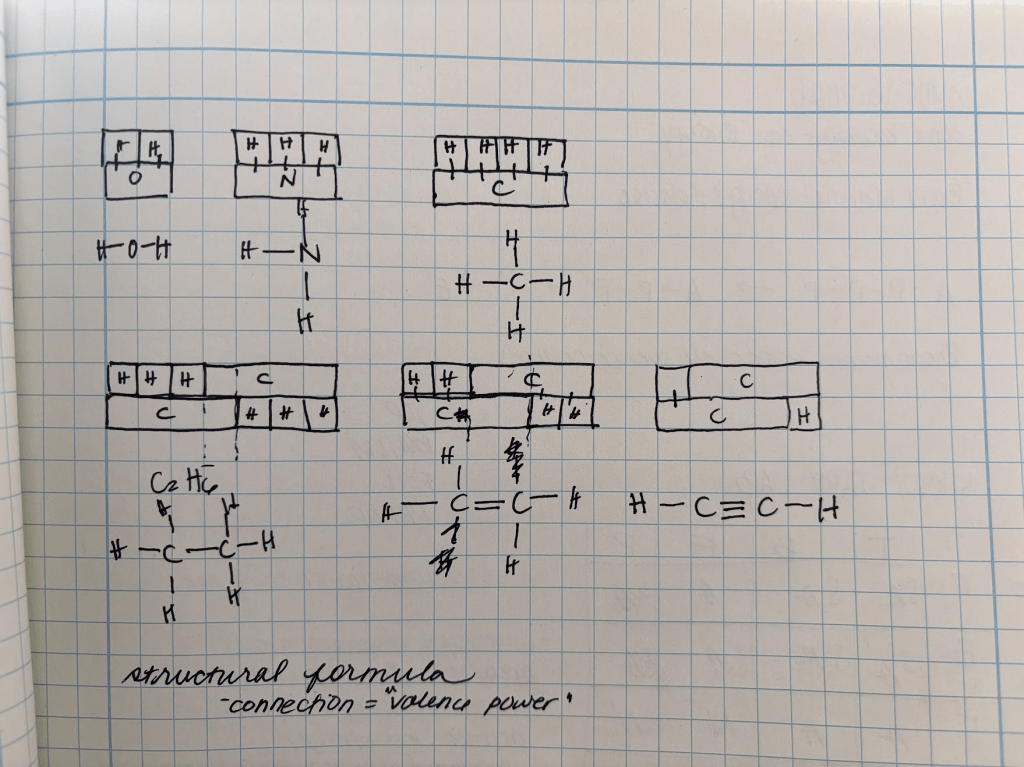
In creating our hydrocarbon compounds, we were able to see that since the carbon had the ability to connect to 4 things, that it might be able to connect to another carbon more than one time. We did call them double and triple bonds, but no more explanation. Maybe there was, but it’s the last week of the workshop–the fatigue is starting to settle in.
Days 1 & 2 of the Nail Lab
We started the Unit 7 nail lab while finishing up Unit 5 because it takes a couple of days to accomplish. First, we massed 3 nails and placed them into a copper (II) chloride solution. I didn’t get a chance to photograph it, but the color was super blue at first, then it turned a really pretty dark green. Then, we let it marinate to the side and went on.
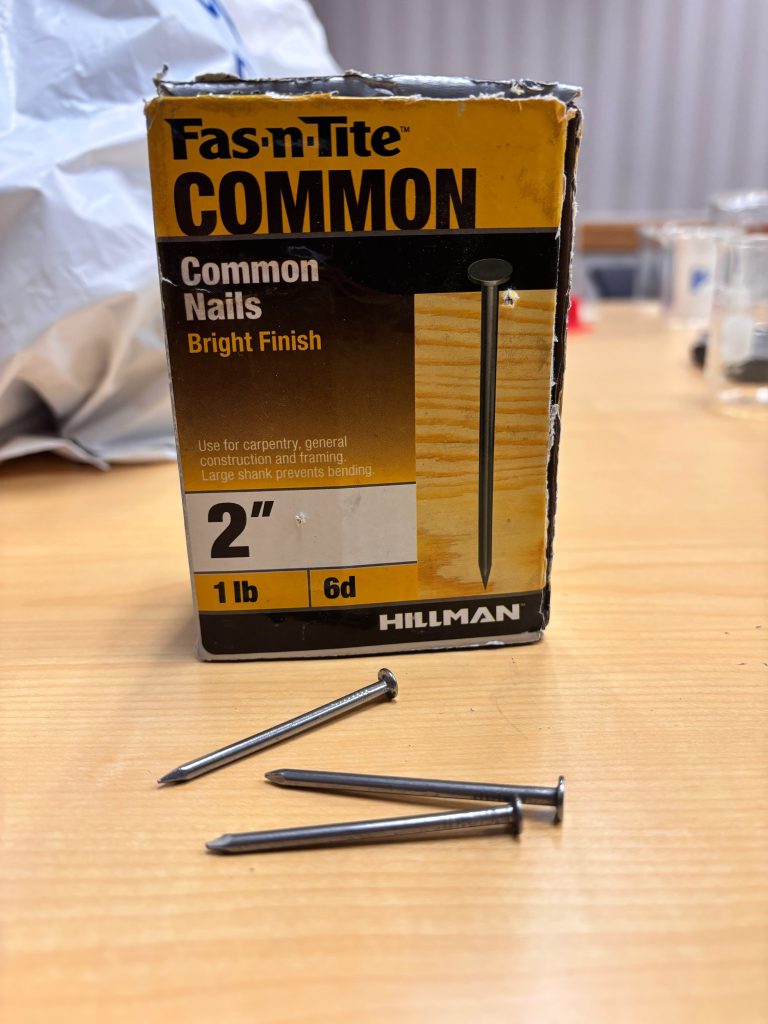
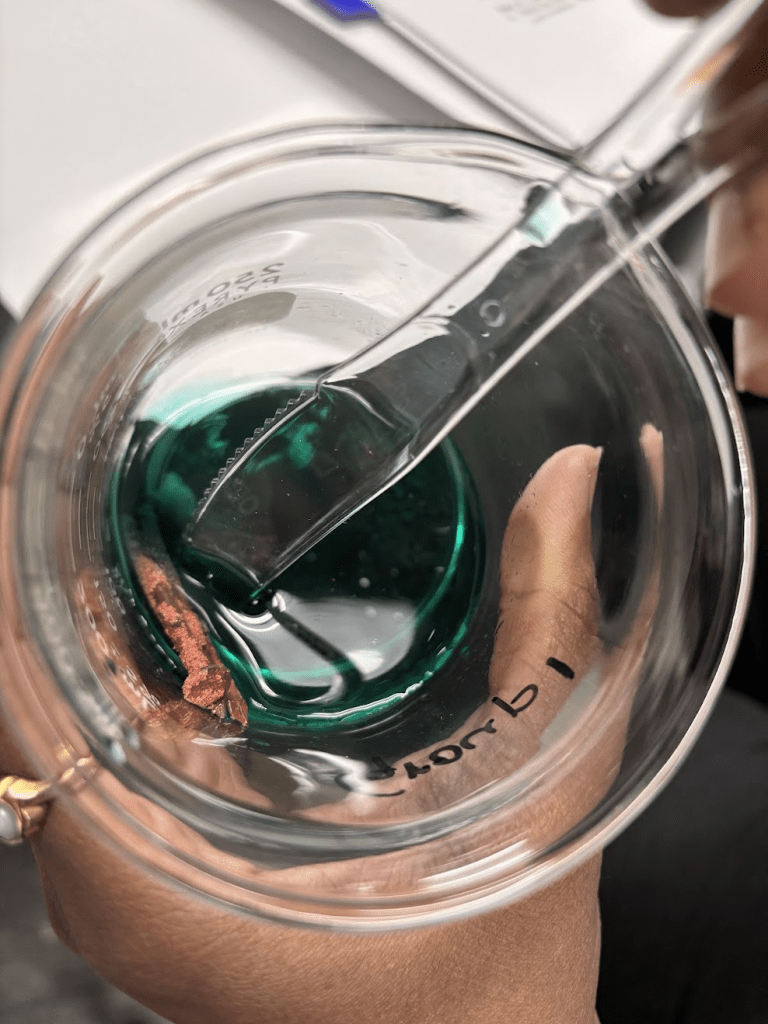
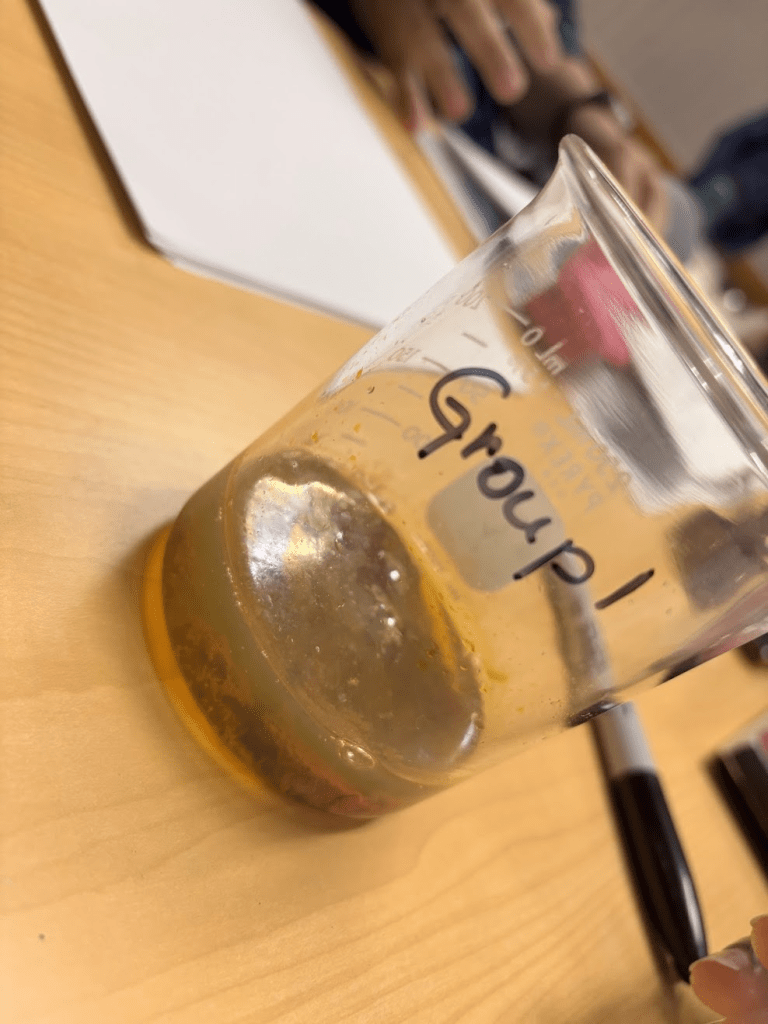
For Day 2, We have now let our nails soak in the copper (II) chloride solution. We saw that the solution turned a really murky color and that some orange-brown colored sediment settled at the bottom of the beaker. We took the nails out using some tongs and placed them into a plastic cup. We rinsed it out a bit and set it to the side. Then, we decanted the solution in the beaker using water, water, HCl, and then water.
Exothermic Bond Breaking: A Common Misconception
I think this was at the beginning of Day 12, and we started with a discussion on the Galley reading. It was about the misconception that Energy is a product of ATP becoming ADP. Rather, it is in the breaking of the bonds where it cost energy. The energy release comes from the making of the bonds. However, now that I’m writing this from memory, I don’t quite remember which bonds are being made. The reason that the ATP –> ADP is an exothermic reaction is in the making of the bonds. Most of us learned that the exothermic reaction came from the breaking of bonds. There was some learning and unlearning that most of us modelers had to do.
U6 Sticky Tape Lab & Debrief
When I first started teaching Physics (10 years ago!), we used to do the Sticky Tape Lab as the intro to our Electrostatics unit. I’m kind of sad that we don’t make it to Electricity anymore, but never say never! Maybe we’ll get a chance to do it again!
Mitch had an EXCELLENT delivery of the charges moving from atom to atom. It involved my historic enemy, Ben Franklin. I used to give a whole shpeal to students hoping to inspire them to be one of the Physics bigwigs and convince the world to stop teaching electricity backwards (as positive ions) moving through a circuit..and how it’s actually Ben Franklin’s fault. But Mitch did so without putting any blame on him and giving JJ Thomson his flowers. I might ask Mitch to record his speech or request his script for this part. It was also at this point that I realized that the “Plum Pudding Model” was not like the Jello pudding I love. Rather, it is like bread pudding. This realization lead to more questions than clarification. Like why would JJ Thomson make that comparison when he said that there are electrons (plums) moving through the atom (pudding)…WHEN the plums do not move in the pudding? Maybe I still do not understand what plum pudding actually is.
Conductivity Test
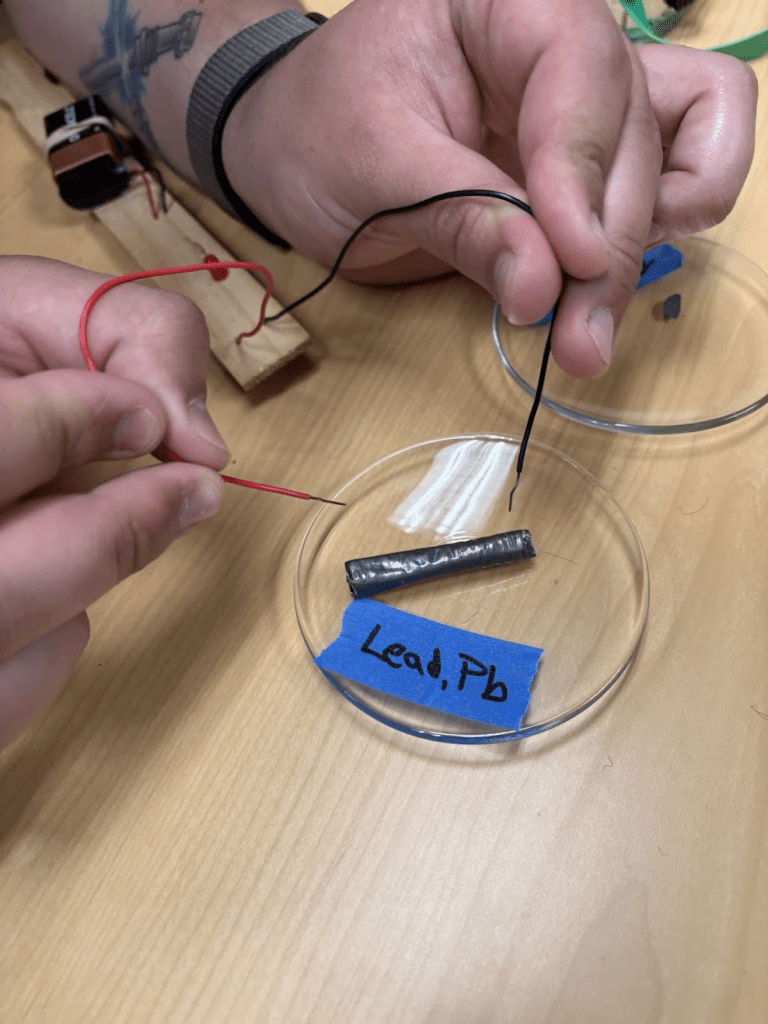
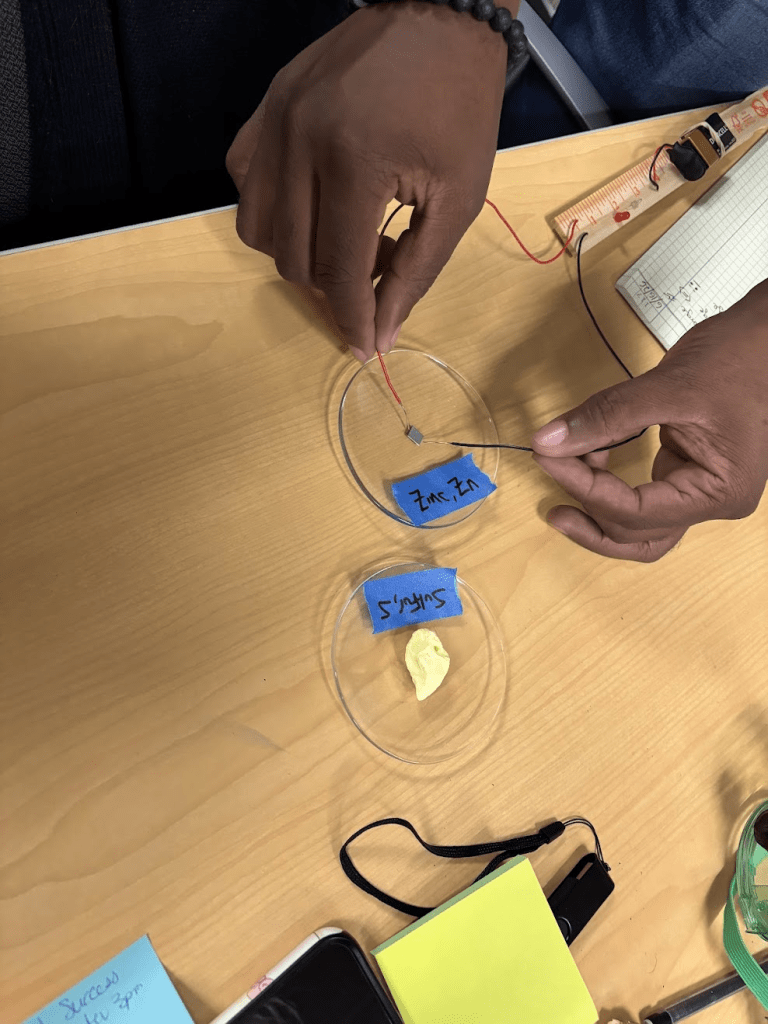
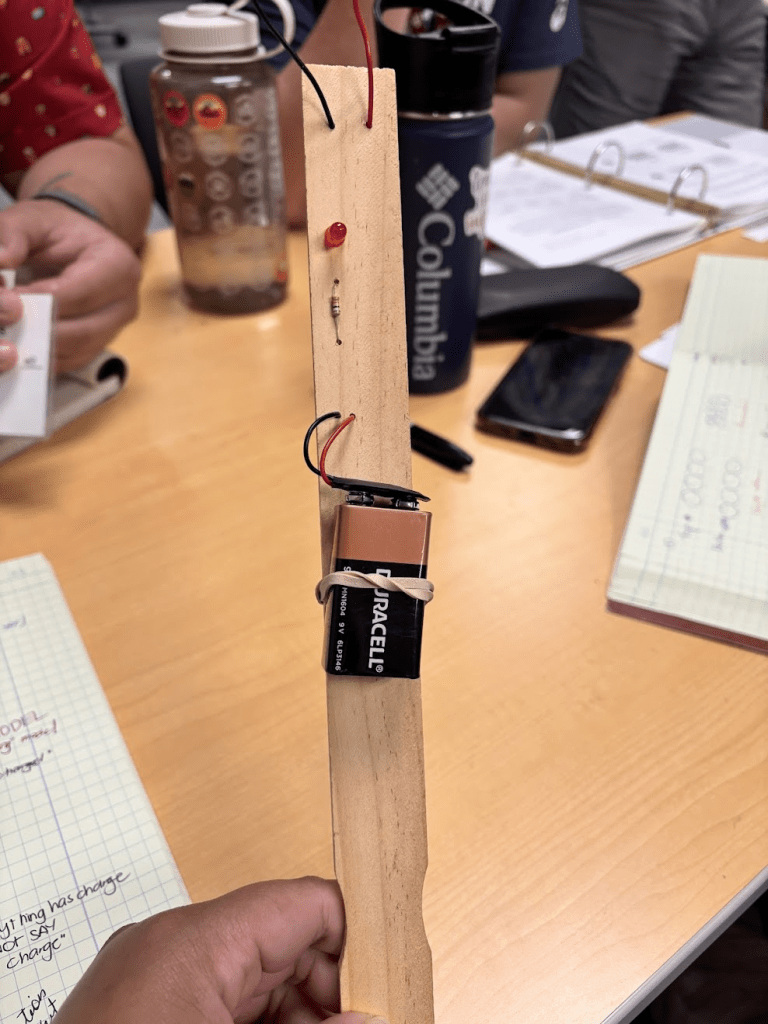
The Conductivity Test Activity wasn’t in the binder (I think), but we went around and test various items. Part 1 was testing a bunch of solid elemental objects. Part 2 was testing some solid compounds specifically: sodium chloride, copper sulfate, sugar, isopropyl alcohol (aq) and water(l). Part 3 was testing compounds in solution: sodium chloride, copper suflate, sugar water, isopropyl alcohol with water, and ammonium nitrate with water. We had a discussion of What does this conductivity thing really mean?
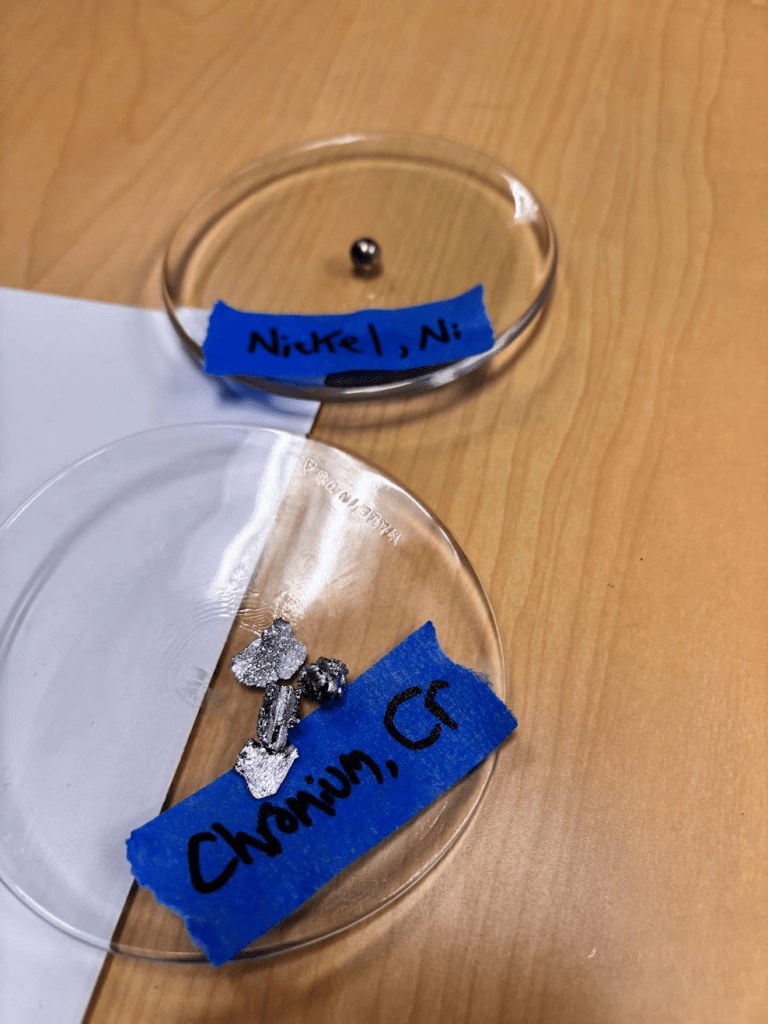
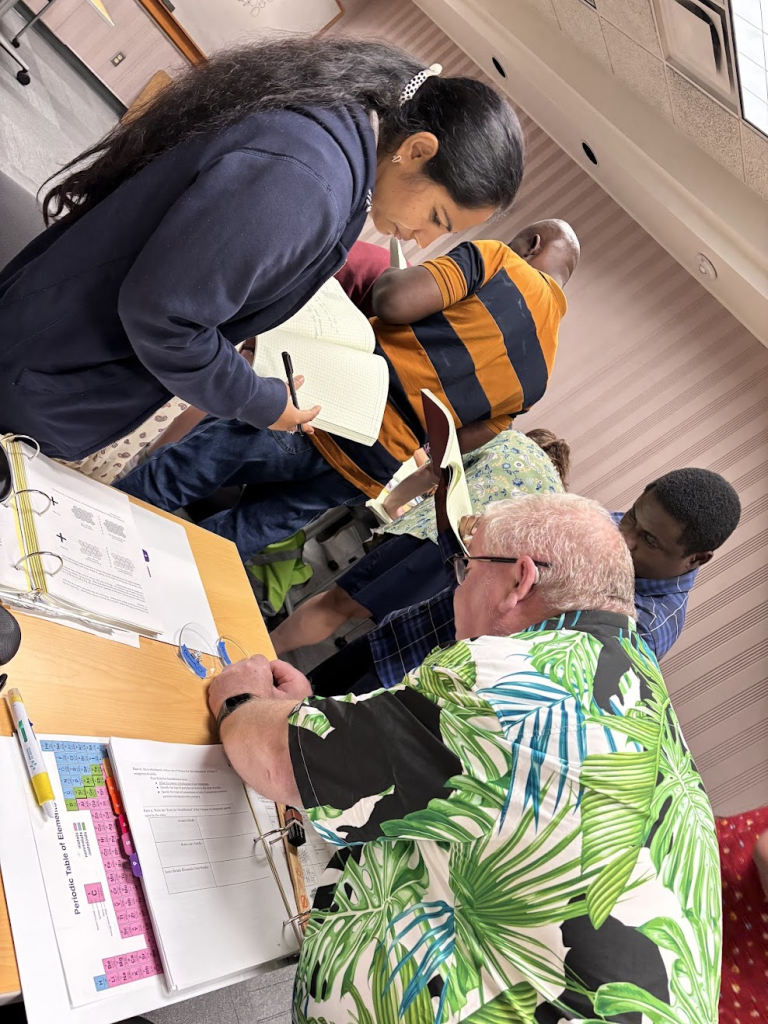
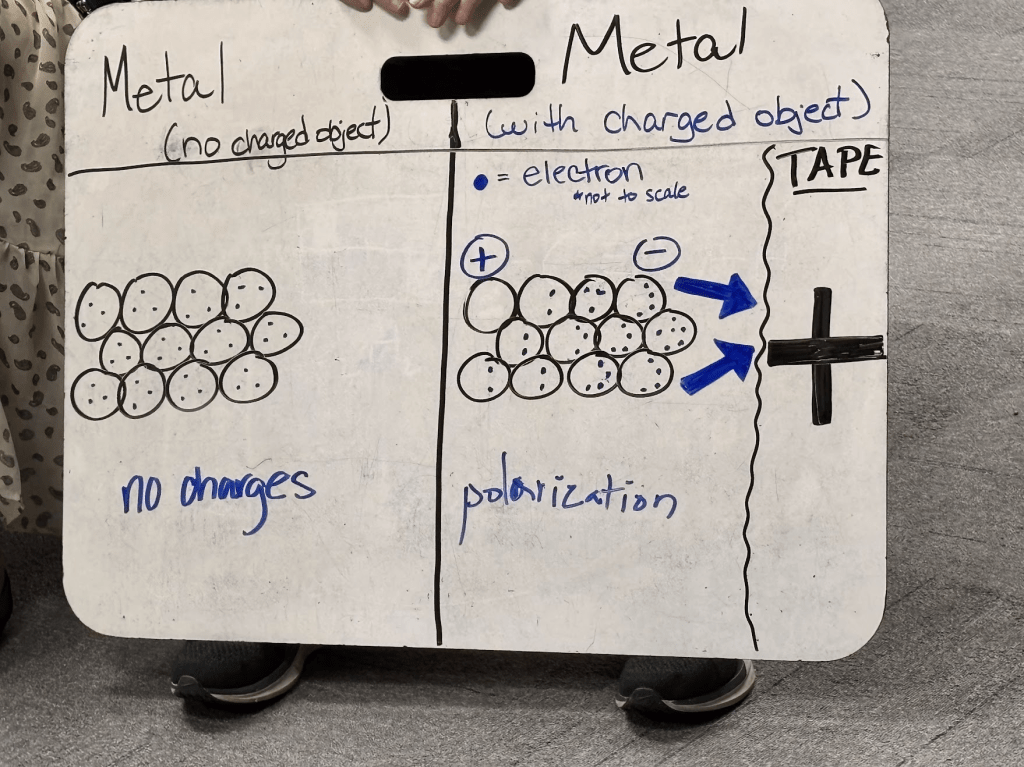
This lead into whiteboarding! Yay! More whiteboarding! Since we were nearing the end of the workshop, and we were tiring of the Board Meeting, the workshop leaders switched it up by having a 1-2 groups present electron movement in the Top tape and Bottom tape..and how that might relate to our discovery of metals, nonmetals, and things in solution. We agreed on some particle convetions like 3 dots in an atom particle means that it’s neutral. Less than three dots would mean that it would have a positive charge, and greather than three dots would indicate a negative charge.
Electrolysis of coppuer (II) chloride
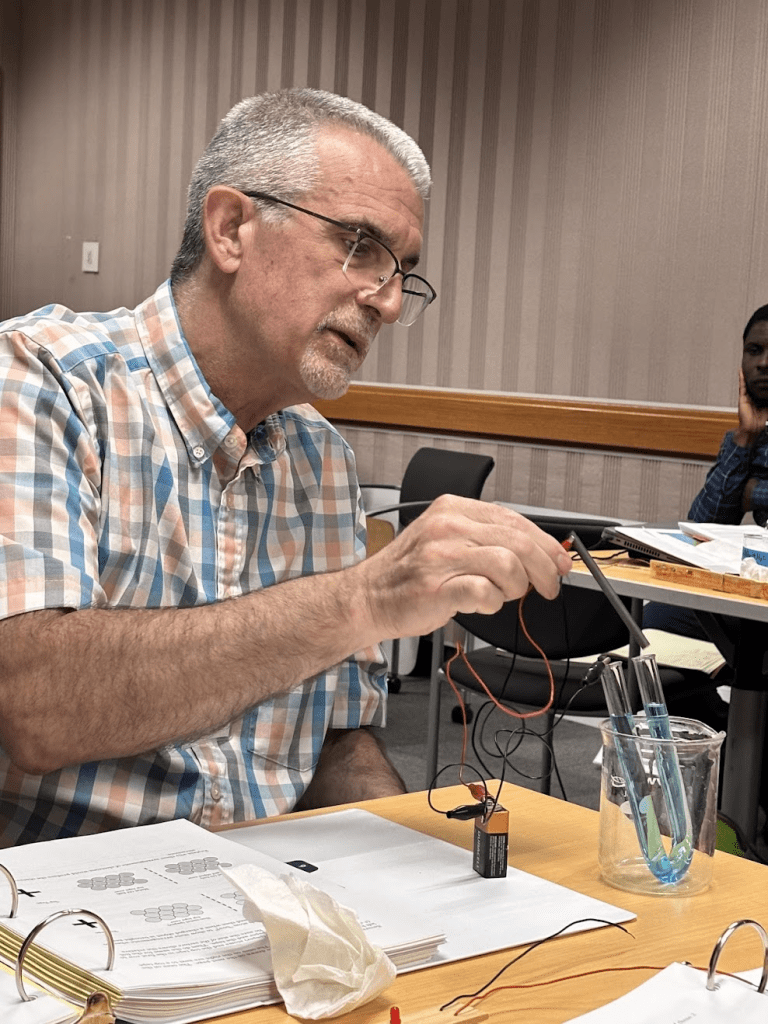
We ended the day with Mitch talking to us about the original u-tube…had to include that Dad joke in there with the week’s proximity to Father’s Day. Basically, we found that the graphite, when powered by a battery, had bubbles forming around the end connected to the positive terminal. The graphite connected to the negative end was plated with copper. We talked more about electorn flow and some evidence that the electrolysis was working. The smell of chlorine gas started wafting through the air, and we deduced that the bubbles forming were chlorine. Mitch emphasized that the chlorine gas floating was neutrally charged. The substance plating the other end must be copper. Therefore, copper must be positive charged and chlorine must be negatively charged.
I kind of pooped out here…

