Physics Camp Days 1-5

Whew! What a week! We learned so much about each other and Physics. The campers were excited about what the day would bring them. I wish I had done a better job of writing about what we did, but hope you enjoy the day’s recap videos!

Here are all the videos! [Day 5- Coming soon…]

Day 1


Day 2


Day 3


Day 4


Day 5

[Coming soon….]

Physics Camp: Things that Crash!

Today, I used a lot of material from Mrs. Freudenberg’s friend, Griff Jones, who is also a modeler. His IIHS-HLDI website has a lot of fun lesson plans for Physics and Biology. (Note to self: This might be a really great entry point for social justice learning in Physics…not sure how yet, but could be…)
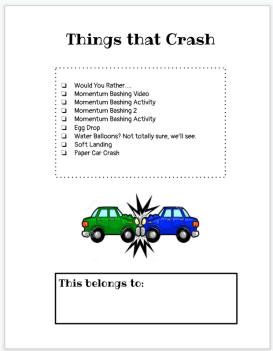
Screen Shot 2019-06-11 at 3.46.42 PM I created a little packet for them to follow today because yesterday, it seemed like we were all over the place and didn’t have something to go back to. The packet made it a little bit more tangible, and the campers were able to go back and forth between the directions for the specific activity and the main point projected onto the board.  However, I really should have created that packet a while ago. Lesson for next time..

Momentum Bashing- We used IIHS in the Classroom’s Lesson: Momentum Bashing 1 and 2 to start with the momentum bashing. I wish I could take credit for thinking of doing this activity because I think it’s super genius, but I’m definitely going to have to credit the wonderful Mrs. Freudenberg here. Using these Momentum Bashing lessons is giving me more ideas to use for next year’s Physics classes. I really like the way they were designed complete with the Introduction, Conclusion, and topical videos.

Water Balloon Toss- After exploring a bit with Momentum Bashing, we walked down to the 2nd floor (we were on the 4th floor) to fill up our water balloons. The Chemistry and Biology classrooms have sinks and the Physics classrooms do not. We learned how to tie water balloons without spraying ourselves. We successfully completed the water balloon tosses without anyone getting completely soaked.

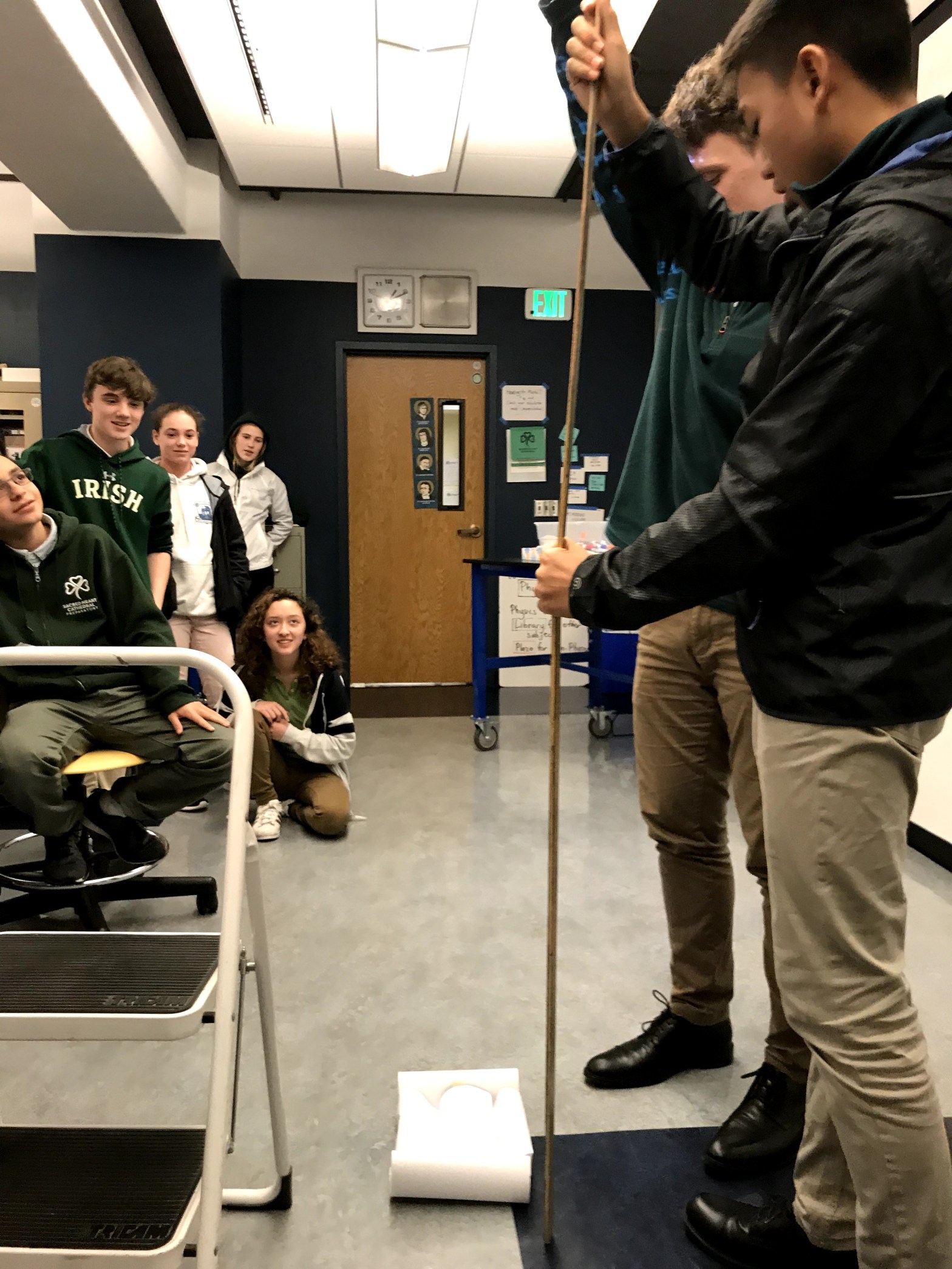
Egg Drop Design Challenge- We made landing pads for [hard-boiled] eggs to land on. Once again, Mrs. Freudenberg hooked it up with a lesson plan- Egg Drop Design Challenge from the IIHS in the classroom website. We used parts of it for Physics last year, and we blew through it. I didn’t take the time to do the pre- and post- discussions with the students. I feel like the younger students were much more creative with their designs. The high school students used more science knowledge, but didn’t readily apply their creativeness to this project. It was great fun watching the students drop their eggs onto their landing pads.

Soft Landing- Next, we did Soft Landing, a design challenge from PBS Kids. I’m going to blame the heat on this, and totally forgot that they were supposed to make this in teams. They each made their own, but instead of 10 balloons, they had 4 to work with. A couple of the students thought that maybe they can combine some of their resources to make a really awesome contraption for their egg. We dropped our eggs from different heights, all the way to three stories up. Our last drop almost got Dr. Skrade, our school’s president, and Ms. Beima, the best volleyball coach ever.

Paper Car Crash- We used the Paper Car Crash lab from the IIHS in the Classroom website. Honestly, my brain was so fried from the heat at this point, students were asking if they can use ____ material for their car. I said yes. By the time I came to, I realized I totally allowed them to use materials that I initially told them not to. Some of the students who were following the rules realized this and called me out on my inconsistencies. I totally get it though, I’d be upset too. At the same time, the classroom needs air conditioning.

Please enjoy this video I made to recap Day 2-

Physics Summer Camp- Things that Go!

I’m 3-4 years removed from middle school, and today, I was reminded of life before high school. Middle school students are energetic, creative, and curious about everything around them. Our Human Bingo card was a little challenging. I tried to make it as specific as possible to our local culture, and for it to take a while. If you’re interested, here’s the bingo card I made:  Human Bingo. I took it from a few different places, and a couple I wanted to add just because I was curious about some things.

For activities, we did the ZipLine Challenge,  2 Wheel Balloon Car, and Movement of Heat (Ice Cream in a Bag). The morning went by really fast. The older students (8th and 9th graders) blew through all the activities. The younger ones had issues with the time limit I set. This was a huge reminder that time limits are vastly different for 6th and 7th-8th graders. Tomorrow, I’ll need to figure out how to fix that. Also, next time, we should have more vanilla extract on hand because when I allowed students to pour their own stuff, it spilled.

I also totally forgot that we did Marble Launchers and Crazy Coasters! I used the Pasco Marble Launchers to do this. I now realize why we don’t use it during the school year. Launching marbles in a hot classroom was one of the most dangerous things I have ever elected to do in a classroom. Marbles were flying everywhere, students running after their marbles, and then there was the don’t hit the projector rule. It was an enjoyable madness. The Crazy Coasters took up a lot of time because the parameter I gave them was to make the coaster last 11 seconds. I could have probably expanded it and had them connect their coasters to make one really gnarly ride.

Here are some pictures:

A special thank you to my three student helpers, Ruby, Victoria, and Colin. They worked hard on putting kits together, and making sure every camp student got what they need.

Day 2 @CUE19

Shifting Math Culture

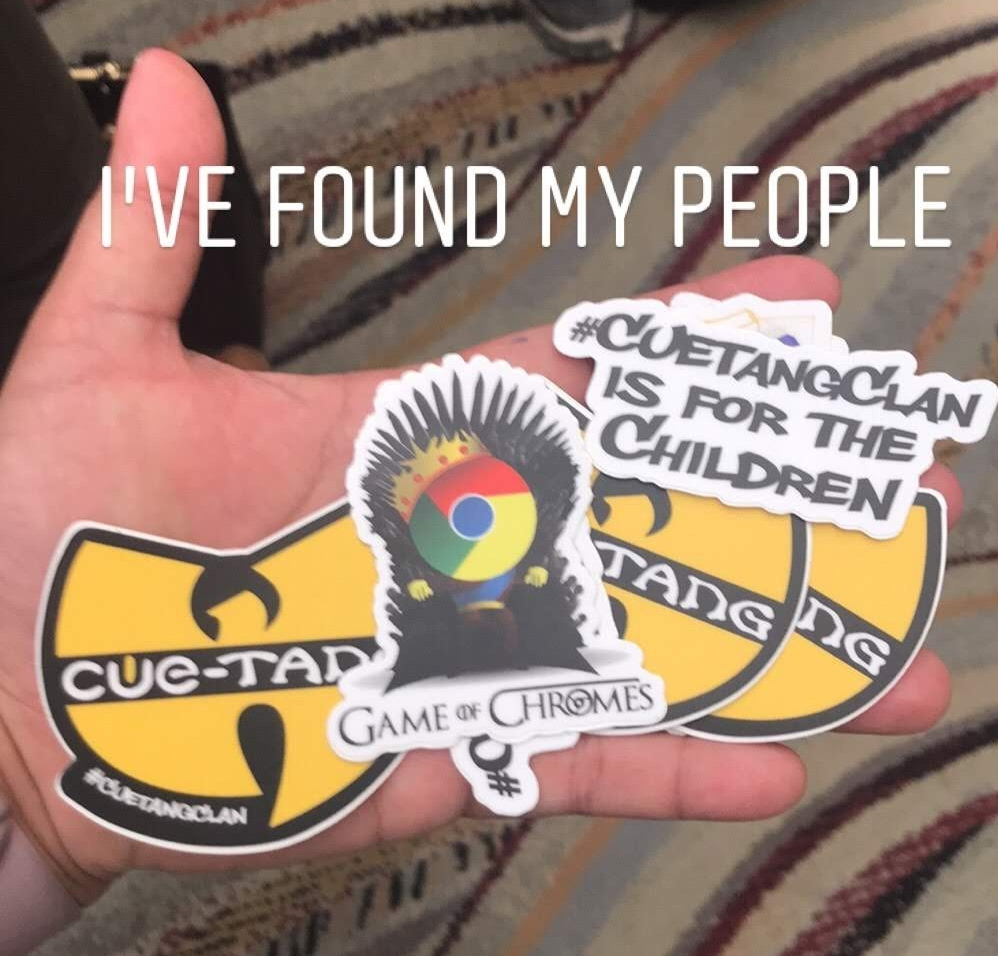
Admittedly, I only attended this session because I was fangirling over @edcampOSjr stickers. Tech + hip-hop, what’s not to love?

c643ca78-3a3e-4d9d-9d0c-4910d724bb2c.jpg
The reason why I attended this session in the first place. Super glad I did!

After the session, I’m realizing that the entire school culture is developed for learners to dislike math and critical thinking. There aren’t many opportunities for students to get up, walk around, take a risk, and converse about math. The presenters went through the necessary introductory slides for a bit and when it came time to get up, take a risk, and discuss math—most of the attendees left! When I walked in, there was basically no room and I forced myself into an empty seat. After the exercise, there were seats available EVERYWHERE. I think that right there is why we allow learners to say that they’re not “math people.”

I went into the exercise with a specific math-phobic student in mind. I have never seen such a drastic shut down in a learner when it came time to talk about numbers. I stood up and went to the group that was closest to me. But then, they were really intimidating. Someone immediately said that they know the answer and then threw some equations up on the board. I left and went to find a less crowded area. At this board, there were 2 other people looking at the board and we were all pretty timid about getting started. Our timidness to start wasn’t because we didn’t want to–I was just reluctant to take a risk with strangers (I can’t speak for the other two).

It totally hit me–I’m a math/science teacher who was too shy to discuss math with other math/science professionals. I was able to get a glimpse of what my math-phobic student must feel like. I wonder to what magnitude the students in my classroom feel physically and emotionally when forced to discuss a math/physics problem.

Screen Shot 2019-03-15 at 10.46.09 AM.png
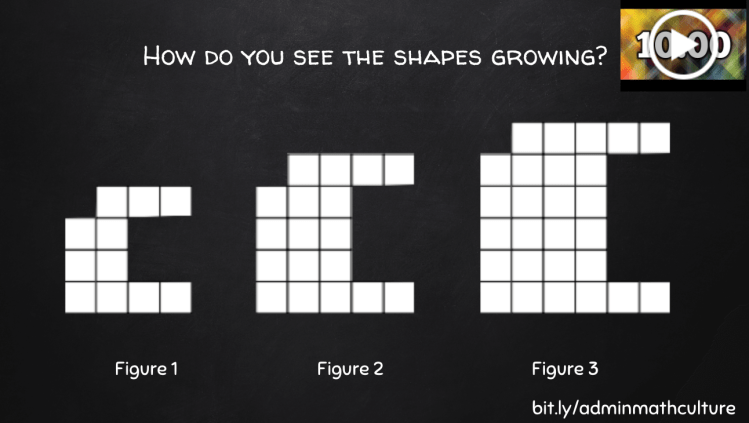
This is the exercise we completed at the session. I like that the bit.ly site to their presentation is included.

It’s really important for teachers to do the math homework themselves.

What a concept! Why do teachers assign math homework without completing it themselves? I try to make sure that I complete the physics homework (so that the students can have an answer key and I can see any potential holes in the teaching).

Some awesome takeaways are:

  • Have students do Number Talks (10 minutes)- It’s really tempting to take these conversations for more than 10 minutes, especially if it’s rich. However, it turns into a lesson. Keep it short.
  • Sentence Frames for math- I recognized the importance of having sentence frames available, especially for those who are getting comfortable with the English language. However, it seems that I need to remember that math is a language that not all the students speak fluently.


Bringing Coding to Life With Raspberry Pi

This was mostly a repeat of what I did at East Bay Cue with @MsHaughs last month. It was fun to discuss with two other educators how we can use it in the classroom. One of my learning partners asked how to set it up in series, and then we took it further and tried to figure out some codes students can use to make the LEDs blink simultaneously or by itself. I really enjoyed that session mainly because of the rich conversation around planning that I was able to have.

Sponsored session-

I was interested in how another school was able to set up their school to be a STEM school. I figured I could transform that into the classroom as a makerspace. Then I realized it was their story of how they ended up using a product. It’s the end of the day, so I ended up leaving a bit early.

Pi Day @Spring Cue 2019

Registration

#CUE19 is going green! There wasn’t a lot of paper involved (thank goodness!). I really like the Sched app used to keep track of all the sessions I’m interested in. I also thought it worked much better than whatever NSTA was using last year. I’m sure that the use of an app for conferences are a relatively new thing, so it’s going to be pretty exciting to see where this use of technology goes!

Ditch that Textbook with Matt Miller

During #MERIT18 Summer bootcamp, we got the opportunity to Skype in with Matt Miller. I was intrigued to find out more, and I’ve spent some of my free time since then casually looking through his material. I have yet to get a copy of his book. (Note: You can only purchase books at a discounted rate at Cue when you have Premium Membership.) His energy totally reignited my desire to do more and do better for the students. I’m seeing all these teachers on the edge of their seats, and I think about how lucky these students are. All these teachers working on finding a way to be innovative in the classroom.

Coding and Science with Scott H. Moss

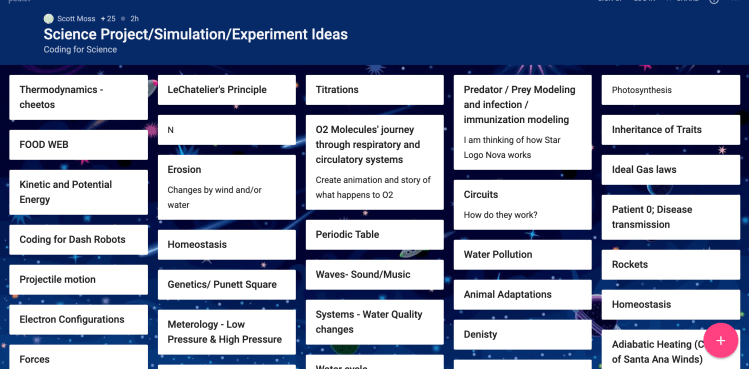
I’m going to chalk it up to this session happening right after lunch. This was mainly using Scratch to code. I really liked how he used the padlet to gather ideas from the attendees about how they can use coding in their curriculum.

Screen Shot 2019-03-14 at 5.31.37 PM.png
This is a screenshot of the ideas that people came up with. I wish we could have spent more time talking about how to code in our subject areas.

We spent a lot of time working as a group working through the States of Matter code example. We looked at how to make our own sprites, how to code the sprites to do different things, and how to create variables and functions. I thought that the example was a good use of time and how coding can be written successfully for a class. The students can exhibit their knowledge of how fast molecules move in comparison to each other in different states. I was thinking that biology/chemistry could use it to showcase a movement of particles in different concentrations.

Scott also showed us a few examples of how students coded for meiosis and mitosis. I remember teaching these two in middle school, and I disliked how I taught the students. I think this would be an excellent use of coding.

Screen Shot 2019-03-14 at 3.59.09 PM.png
Screenshot of our code for the session’s example.

Science: Hip-Hop edition

During lunch, Ms. B and I were looking through all the presentations available tomorrow. As I was going through the Twitter feed, I ran into @edcampOSjr’s tweets. I’ve heard so much about him through @LisaTeachesTech and through all the @KCI courses offered. It turns out he loves hip-hop as much as most of my friends do! So….it inspired me to create these series:


Yes, I created stickers for my classes. There will be a series of kinematic equations using the RUN D.M.C. format. I’m afraid I took my corniness to a whole new level. So far, I only ordered the Straight Outta Physics. I’m going to be very obsessed with these stickers. I think I might design one each for the science classes.

Code to Circuitry unlocked

Saturday Teachers

Spent most of my Saturday with a bunch of other passionate educators at the East Bay CUE STEM Symposium in Pleasant Hill. Although it is a required #MERIT18 attendance, I’m really glad that my membership with #MERIT18 has opened my world to a new PLN.

Raspberry Pi & Python

There were many sessions available for the day’s symposium, but I have been searching and looking for a way to go from coding to circuitry (while bringing coding to the next unit). I am pretty sure Raspberry Pi is now the way. Amanda Haughs (@MsHaughs) showed us how to use the solderless breadboards to create simple circuits. The kits provided contained interesting LEDs that had large LEDs in it. I think those would be so nice to use in the classroom. The small LED bulbs aren’t always so obvious when lit, especially if the classroom is bright or if the bulbs were used in a previous experiment.

The next part was using Python with the Raspberry Pi computers. Even though I generally created the materials for class, had one-on-one sessions with students who struggled through coding, I forgot how to apply the syntax into this new situation. I liked the fact that scaffolding to achieve the tasks was removed, but the notes and material created for the coding lessons were still usable. With the circuitry, it will be both tactilely and visually obvious that the code either worked or didn’t.

I generally enjoyed this all day session and learning with the other teachers. This was the bridge I have been searching for to make the coding to circuitry units make more sense. I hope that I can get approval from the department chair to purchase a class set. (Or maybe, I can make it a “required textbook” for next year? We’ll see…

Although the photos don’t do it justice, I actually did more than what the pictures show. At one point, I had three LED lights (with resistors) connected. I love any project that shows blinky lights!

Happy Valentine’s Day!

It has been challenging trying to teach entry level coding to a group of seniors who are at varying levels of coding. Last year, we (Making, Hacking, and Tinkering teachers) decided to create a paper and pen quiz. It was a terrible idea with good intentions. First of all, students weren’t used to handwriting code out, so indentations and lining up the lines of code were all over the place. Second, unless you’ve been coding for a while, you don’t really have the functions memorized. This year, I decided to have them code for a couple different projects. Quiz 2 was to make a Valentine’s Day card that the user can choose who it’s for and who it’s from. Some students who have had more experienced allowed the user to choose their message. Some users were also able to retrieve an image file and include it into their card. There were some assignments turned in who are obviously frustrated by programming, but I’d like to share some of the more creative ones! Not everyone has turned them in yet, but I’m sure they’ll come in soon!


Momentum-Impulse Unit

My first year of teaching Physics, we did not include momentum-impulse. Second year Physics, we briefly went through impulse quickly. This year, we had an actual unit and went through it. The wonderful Mrs. F brilliantly created some templates for students to work through some of these word problems. When I was in high school learning Physics, I was confused about the givens especially for initial and final situations. The algorithm of mathematics was easy, but comprehending and making sense of the word problems was the difficult part.

Because of the scaffolding Mrs. F created, the students were able to make sense of the problem and show it in multiple ways. They graphed mass-velocity graphs. They filled out a template. They showed their algebra. It’s all very brilliant.

Momentum-Impulse Schedule:

  • Day 1: Invention Task, WB Battles, Practice 1
  • Day 2: WB Practice 1, Discussion 1, Activity 2
  • Day 3: Quiz 1, WB Activity 2, Practice 2
  • Day 4: Questions- Practice 2, WB Practice 3, Egg Drop
  • Day 5: WB Practice 3, Car Crashes, Impulse-Momentum
  • Day 6: Review Momentum-Impulse & start Energy Unit

Leading PD for Tech & Assessments

Today’s challenge was leading a group of colleagues in a PD. My past self signed up to lead something on tech. It’s probably me coming down from a learning high from #MERIT18. I was quite nervous to lead a PD at a high school level. I’ve done a couple PD sessions for unpacking Common Core for math at the elementary school level for people I’ve worked with for a very long time and one for using Catholic social teachings in math for a bunch of strangers. Doing this at a high school level…I felt like I was back in high school myself!

I talked about the difference between formative and summative assessments and my own philosophy on integrating tech. I did discuss how Participation grades weren’t a part of the classes I teach because it was hard to measure “participation” for a student trying to meet the standard: “I can analyze a Force vs. mass graph.” After explaining my own background and philosophies, I was able to move forward in the tools I use.

If you’re interested in what I shared, here it is: bit.ly/TechPD2019mlm

Next time, I need to plan it better so that I make the PD last the whole hour…and not the twenty minutes I took.